Meta Description: Learn about the fundamental difference between an interior designer and a contractor (craftsman), and why you need both for your home renovation project to be successful. Harmonie Interiors – We offer design and supervision of implementation in a comprehensive service.
Keywords: interior designer, craftsman, contractor, home renovation, design implementation, difference between designer and contractor, interior designer
Introduction
When you decide to renovate your home or design a new space, you will hear two terms used frequently: “interior designer” and ‘contractor’ or “craftsman.” Many people confuse the two or think they are one and the same, but the truth is that each has a completely different role—and both are necessary for the success of any project.
At Harmonie Interiors, we work with both parties to achieve the best result—from the creative idea to the precise, realistic execution. Over the years, we have seen projects fail because the client relied on one without the other. In this article, we will explain the difference between them, why you need both, and how they work together.
Who is an interior designer?
Definition
An interior designer is a professional who plans the space, develops the overall concept, and draws the final design. They are the “creative mind” behind the project—thinking through every detail from colors and materials to furniture placement and lighting.
For a deeper understanding of the role of an interior designer, read our article: What is interior design and why is it important?
The tasks of an interior designer
- Analyzing the space and needs
- Studying the available space and understanding its potential
- Understanding the client’s needs and lifestyle
- Determining the budget and schedule
- Planning and design
- Drawing floor plans
- Preparing 3D visualizations
- Choosing the color palette, materials, and finishes
- Designing natural and artificial lighting
- Choosing furniture and accessories
- Preparing technical documents
- Detailed drawings for carpenters, electricians, and plumbers
- Material and quantity schedules
- Finishing specifications
- Supervision and coordination
- Coordinating between different craftsmen
- Monitoring implementation and ensuring it matches the design
- Solving problems that arise during work
From our experience at Harmonie Interiors: One of our most important roles is “translation”—we translate the client’s wishes into technical drawings that the craftsman can understand. When the client says, “I want a modern and warm kitchen,” we translate that into: olive green cabinets, gray marble with white veins, warm LED lighting, and walnut flooring. Then we draw all of this in detail for the carpenter.
Required skills
- Highly aesthetic and creative sense
- Technical knowledge of materials and construction
- Ability to draw and use design software (AutoCAD, SketchUp, 3ds Max)
- Communication and project management skills
- Understanding of client needs and preferences
Who is the implementer (craftsman)?
Definition
The implementer or craftsman is the person who turns the design into reality. They are the “skilled hands” that execute what the designer has drawn. This includes carpenters, painters, electricians, plumbers, plasterers, ceramic installers, and others.
Types of Craftsmen
- Carpenter
- Manufacturing and installing cabinets and kitchens
- Wooden doors and windows
- Custom-made furniture
- Cladding and wood decorations
- Electrician
- Extending wires and cables
- Installing light fixtures and switches
- Installing chandeliers and hidden lighting
- Plumber
- Extending water and drainage pipes
- Installing sanitary fixtures
- Installing heaters and pumps
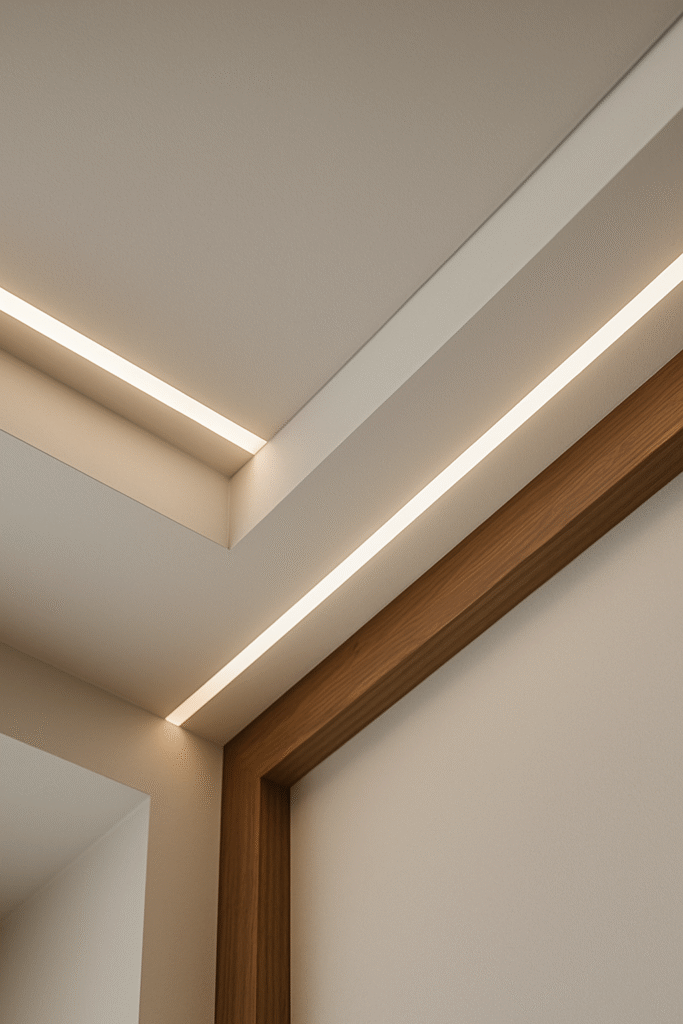
- Gypsum board worker
- Installation of false ceilings
- Partition walls
- Decorations and hidden lighting
For more on gypsum board designs, read: Modern gypsum board designs for elegant spaces
- Ceramic and marble installer
- Installation of floor and wall tiles
- Installation of marble and granite
- Mosaic work
- Painter
- Painting walls and ceilings
- Applying wallpaper
- Special finishes (stenciling, antiquing) Required skills
- Manual dexterity and precision in execution
- Experience in using tools and equipment
- Ability to read technical drawings
- Knowledge of material properties
- Commitment to safety standards
The fundamental difference between them
| Aspect | Interior designer | Implementer (craftsman) |
|---|---|---|
| Role | Plans and designs | Implements and installs |
| Tools | Design software, drawings | Hand tools and machines |
| Output | Visualizations and plans | Tangible product |
| Thinking | Creative and conceptual | Technical and practical |
| Interaction | With ideas and vision | With materials and raw materials |
Example:
Modern kitchen project
The space was measured accurately
- After asking the client about her cooking habits (she cooks daily for a family of 5)
- We designed a U-shaped kitchen layout with a designated area for quick breakfasts
- We chose olive green cabinets with gray marble and red chandeliers as a color accent
- We prepared 3D drawings for the client to see before implementation
- We specified the specifications of each element: type of wood, marble thickness, appliance model, all implementation plans
The carpenter’s role (implementer):
- He received the detailed drawings from us
- He manufactured the cabinets in his workshop according to the exact measurements
- He installed the cabinets in their place, making sure they were level
- He installed the shelves, drawers, and hinges
- Installed the handles and accessories
The result: A kitchen that matches the vision 100% because every step was documented and planned.
Why do you need both?
Without an interior designer
If you rely solely on the craftsman:
- You may get a good execution of a bad idea
- You won’t make the most of the space
- You may choose materials that don’t match
- You will lack an overall vision and coordination between elements
- You may discover mistakes too late
Example: A client contacted one of our specialists for advice on decoration and furniture after renovating his apartment directly with craftsmen. The result: the kitchen is beautiful, but the refrigerator does not open fully because it is too close to the wall, and the living room is wonderful, but there is no suitable place for the TV! These mistakes could have been avoided with advance planning.
Without a professional contractor
If you rely solely on the designer:
- The ideas will remain on paper
- Poor execution ruins even the best designs
- The result may not match your vision
- You will encounter problems with durability and quality
Perfect integration
When the designer and contractor work together in harmony:
- The creative idea becomes a reality
- Problems are solved before they arise
- The schedule is respected
- The budget is strictly controlled
- The end result satisfies everyone
How do we work at Harmonie Interiors?
We offer a comprehensive service that combines design and supervision of implementation:
- We start with the design
- We listen to your needs and vision in a free consultation session
- We prepare realistic 3D visualizations
- We choose materials and colors with you (read: How to choose the right colors?)
- We prepare the implementation documents
- Detailed drawings for each craftsman
- Quantity and specification tables
- A clear schedule
- We supervise the implementation
- We coordinate between our approved craftsmen
- We visit the site periodically to ensure that the implementation matches the design
- We solve any problems as soon as they arise
- We deliver a complete project
- We check all the details with you
- We make sure you are satisfied with everything
- We make final adjustments if necessary
Tips for dealing with craftsmen
To avoid common problems, read our comprehensive article: Common mistakes during home renovations
Before you start
- Get a clear, approved design
- Request quotes from more than one contractor
- Ask about previous work and references
- Agree on a schedule in writing
- Clearly define payment terms (don’t pay everything up front!) During the project
- Check in regularly
- Don’t change your mind too often (changes are expensive)
- Document any changes in writing
- Communicate through the designer if possible
After completion
- Inspect the work thoroughly before final payment
- Keep warranty invoices
- Ask about regular maintenance
Conclusion
The interior designer and the contractor are indispensable partners. The designer provides the vision and planning, and the contractor turns that vision into reality. When the two work in harmony under good supervision, the result is a beautiful, functional, and durable space.
At Harmonie Interiors, we pride ourselves on offering this integration—we design creatively and oversee the execution professionally to ensure a result that exceeds your expectations.
Do you have a renovation or design project?
Let us help you from concept to completion. Contact us today for a free consultation.
📞 Phone: +4915753830968
📧 Email: info@harmonie-interiors.de
📍 Address: Von-Liebig-Straße 1, 52531 Übach-Palenberg, Germany